Meta Description
Discover the top cloud hosting providers for small businesses in 2026. Compare the best platforms for scalability, performance, pricing, and business growth.
Top Cloud Hosting Providers for Small Businesses in 2026
Cloud hosting has become the backbone of modern small business infrastructure. In 2026, almost every growing business depends on cloud hosting to power websites, ecommerce stores, SaaS applications, customer portals, and internal business systems. Unlike traditional hosting, cloud hosting uses a network of connected servers, which makes it more scalable, more reliable, and significantly faster under load.
Small businesses are increasingly moving away from shared hosting because performance limitations and downtime risks can directly affect sales and customer trust. Cloud hosting solves these issues by distributing resources dynamically across multiple servers, ensuring better uptime, stronger performance, and flexible scaling as traffic grows.
Industry research shows that cloud hosting adoption continues to rise rapidly among startups and SMEs due to its affordability, flexibility, and enterprise-level capabilities.
In 2026, cloud hosting is no longer just a technical upgrade — it is a business growth strategy. Companies that adopt cloud infrastructure early gain advantages in speed, security, automation, and global scalability.
Why Small Businesses Are Switching to Cloud Hosting
Small businesses today operate in a highly competitive digital environment. Website speed, uptime, and security directly impact revenue and customer experience. Cloud hosting helps solve these challenges by offering elastic infrastructure that scales automatically based on demand.
One of the biggest advantages is scalability. Businesses can start small and expand resources instantly without migrating servers or experiencing downtime. This is especially important for ecommerce stores, digital agencies, and SaaS startups where traffic can fluctuate dramatically.
Another major benefit is reliability. Cloud hosting does not rely on a single physical server. Instead, workloads are distributed across multiple servers, which reduces the risk of failure and ensures continuous uptime even during hardware issues.
Security is another critical factor. Modern cloud hosting providers include advanced protection such as firewalls, DDoS mitigation, encrypted storage, and automated backups. This level of security was previously only available to large enterprises but is now accessible to small businesses.
Cloud hosting also improves performance through global data centers. Websites load faster because content is delivered from the nearest server location to the user. This improves SEO rankings, reduces bounce rates, and increases conversion rates.
Overall, cloud hosting provides small businesses with enterprise-grade infrastructure at a fraction of traditional enterprise costs.
Hostinger Cloud – Best Overall Cloud Hosting for Small Businesses


6
One of the strongest cloud hosting options for small businesses in 2026 is Hostinger Cloud Hosting. It is widely recognized for its combination of affordability, speed, and simplicity, making it ideal for beginners and growing businesses.
Hostinger cloud hosting is built for users who want performance without complexity. It provides a user-friendly control panel (hPanel), built-in caching, SSD storage, and optimized server configurations that improve website speed significantly.
One of the key advantages of Hostinger is its performance optimization. The platform uses LiteSpeed servers and advanced caching systems that help websites load faster even during traffic spikes. This is extremely important for small businesses that rely on SEO traffic and paid advertising.
Another strong benefit is scalability. Businesses can upgrade resources instantly as traffic increases, without downtime or technical migration. This makes Hostinger a flexible long-term solution for growing websites.
Hostinger also includes AI-powered tools for website building, content creation, and performance optimization, making it even more valuable for non-technical users in 2026.
Overall, Hostinger is one of the most balanced cloud hosting solutions for small businesses that want speed, simplicity, and affordability in one platform.
DigitalOcean – Best Developer-Friendly Cloud Hosting


6
DigitalOcean is one of the most popular cloud hosting platforms among developers, startups, and tech-driven small businesses.
Unlike traditional shared hosting, DigitalOcean offers virtual machines known as “Droplets,” which give users full control over their server environment. This makes it ideal for SaaS applications, APIs, custom web apps, and scalable backend systems.
One of the biggest advantages of DigitalOcean is simplicity combined with power. While platforms like AWS can be complex, DigitalOcean provides a clean interface and straightforward pricing structure that small teams can easily understand.
DigitalOcean also offers managed databases, Kubernetes clusters, object storage, and app deployment services, allowing businesses to scale into enterprise-grade infrastructure over time.
However, it requires some technical knowledge, making it more suitable for developers or businesses with technical support.
Despite this, DigitalOcean remains one of the top choices for small businesses that need flexible cloud infrastructure with predictable pricing and strong performance.
AWS Lightsail – Best for Enterprise-Level Scalability


6
Amazon Web Services Lightsail is a simplified version of AWS designed specifically for small businesses that want access to enterprise-grade infrastructure without the complexity of full AWS services.
AWS is the largest cloud provider in the world and powers millions of businesses globally. It offers unmatched scalability, global data centers, and a massive ecosystem of cloud services including AI, machine learning, databases, and serverless computing.
AWS Lightsail simplifies this experience by offering pre-configured virtual servers, storage, and networking at predictable monthly pricing.
One of the biggest advantages of AWS Lightsail is reliability. Businesses benefit from Amazon’s global infrastructure, ensuring strong uptime and high performance across regions.
It is especially useful for businesses planning long-term scaling, as they can easily transition into full AWS services as their needs grow.
However, AWS still has a learning curve compared to simpler platforms, making it better suited for growing businesses rather than complete beginners.
Google Cloud Platform – Best for AI and Data-Driven Businesses


5
Google Cloud is one of the most powerful cloud hosting providers for businesses focused on data analytics, artificial intelligence, and machine learning.
Google Cloud is known for its advanced infrastructure, high-speed network, and deep integration with AI services. Businesses that rely on data processing, predictive analytics, or large-scale applications often prefer Google Cloud for its performance and AI capabilities.
One of its strongest advantages is integration with Google’s ecosystem, including BigQuery, AI tools, and global content delivery networks.
Google Cloud is particularly popular among startups building AI-powered applications or data-heavy platforms. However, pricing complexity and technical requirements can be challenging for smaller teams.
Despite this, it remains one of the most advanced cloud hosting platforms available in 2026.
Cloudways – Best Managed Cloud Hosting Platform


7
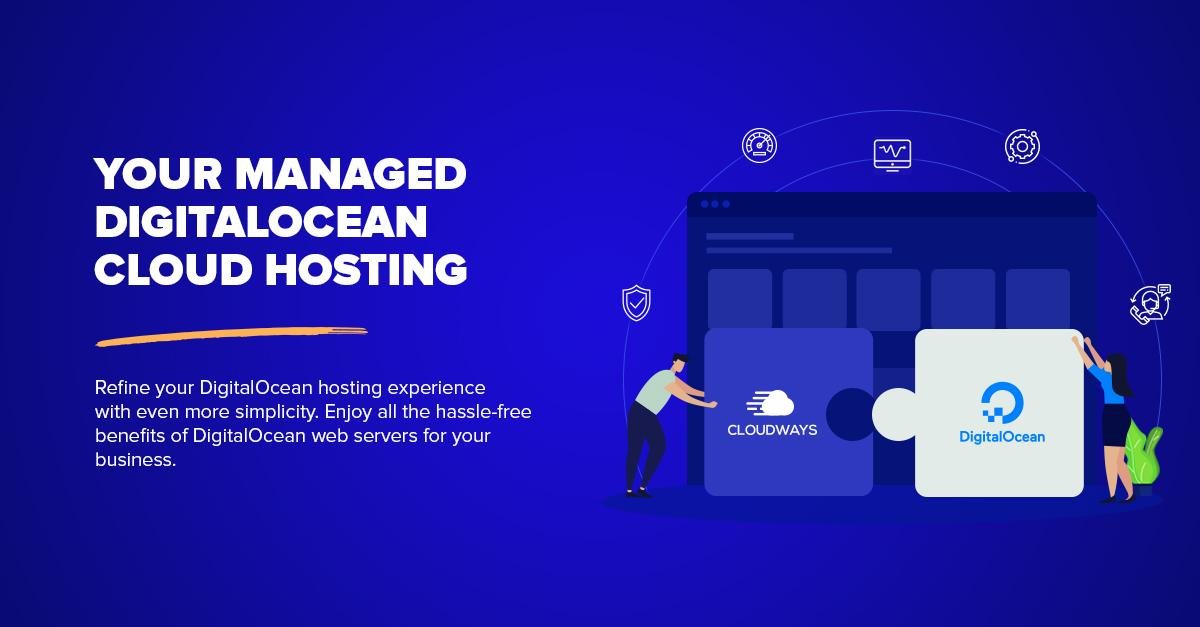
Cloudways is a managed cloud hosting platform that sits on top of providers like DigitalOcean, AWS, and Google Cloud.
Instead of managing servers manually, Cloudways handles server setup, security, backups, and optimization. This makes it extremely useful for small businesses that want cloud performance without technical complexity.
Cloudways allows businesses to choose their preferred cloud provider while simplifying the entire hosting experience through a clean dashboard.
One of the biggest advantages is ease of use combined with scalability. Businesses can deploy applications quickly, scale resources easily, and manage multiple websites without server management knowledge.
Cloudways is widely used by agencies, ecommerce businesses, and freelancers who want high performance without dealing with infrastructure configuration.
Vultr – Best Budget Cloud Hosting Option


6
Vultr is one of the most affordable cloud hosting providers in 2026, making it a strong option for startups and small businesses with limited budgets.
Vultr offers high-performance cloud servers with global data centers, allowing businesses to deploy websites closer to their customers for better performance.
One of its strongest features is cost efficiency. Businesses can start with very low monthly pricing while still accessing SSD storage, fast networking, and scalable infrastructure.
Vultr is particularly popular among developers, SaaS startups, and businesses that need flexible cloud environments without high costs.
Although it lacks some advanced managed features found in premium platforms, it delivers excellent raw performance for its price.
Why Cloud Hosting Is Critical for Business Growth in 2026
Cloud hosting is now directly linked to business success. Website performance affects SEO rankings, user experience, and conversion rates. Slow or unstable websites can lead to lost revenue and damaged brand reputation.
Modern cloud platforms also support automation, allowing businesses to integrate AI tools, analytics systems, CRM platforms, and marketing software seamlessly.
Another major advantage is global scalability. Businesses can expand into new markets without rebuilding infrastructure. Cloud hosting allows instant deployment across multiple regions.
Security is also a major factor. With increasing cyber threats, cloud hosting providers now offer enterprise-grade protection that small businesses could not afford independently in the past.
As digital transformation accelerates, cloud hosting is becoming the foundation of modern business operations.
How to Choose the Best Cloud Hosting Provider
Choosing the right cloud hosting provider depends on business needs, technical skills, and budget.
Businesses focused on simplicity should choose Hostinger or Cloudways. Developer-focused teams often prefer DigitalOcean or Vultr. Data-driven companies benefit more from Google Cloud, while enterprise-level businesses prefer AWS.
Important factors to consider include:
- Performance and uptime
- Scalability options
- Pricing transparency
- Ease of use
- Security features
- Customer support
- Integration with business tools
Selecting the right platform ensures long-term stability and growth.
Final Thoughts
Cloud hosting has become an essential infrastructure for small businesses in 2026. It provides the flexibility, performance, and security needed to compete in modern digital markets.
Providers like Hostinger, DigitalOcean, AWS, Google Cloud, Cloudways, and Vultr continue dominating the industry due to their scalability, innovation, and reliability.
For small businesses, adopting cloud hosting is no longer optional — it is a strategic decision that directly impacts growth, performance, and long-term success in the digital economy.